State of Astronomy 2025
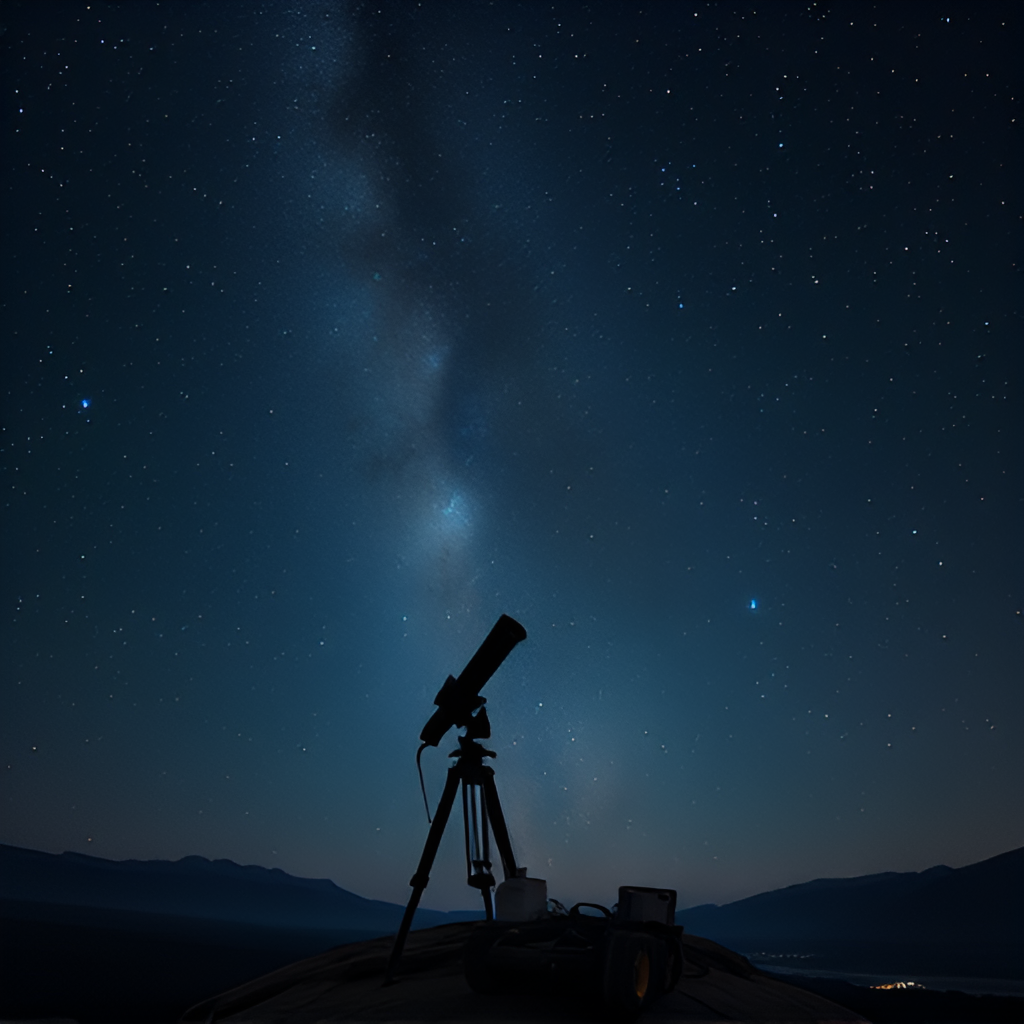
State of Astronomy 2025
As we close out 2025, the year has been one of significant advancements and eye-opening discoveries in space exploration and astronomy. From interstellar visitors to the potential weakening of dark energy, here’s a detailed look at some of the highlights that have shaped our understanding of the cosmos this year.
The Interstellar Visitor: Comet 3I/ATLAS
Undoubtedly the highlight of the year was the discovery of Comet 3I/ATLAS, only the third interstellar object ever detected cruising through our solar system. Spotted in July, its hyperbolic trajectory and blistering speed of 36 miles per second confirmed it wasn’t from our neighborhood. Unlike ‘Oumuamua, this visitor displayed clear cometary activity, including a rare “anti-tail” pointing toward the Sun. It served as a perfect target for the Europa Clipper probe, which captured unique angles of the object while en route to Jupiter.
Black Holes: Runaways and “Little Red Dots”
2025 was a banner year for black hole physics. The James Webb Space Telescope (JWST) confirmed the existence of a “runaway” supermassive black hole, a cosmic titan weighing 10 million suns that is rocketing through space at 2.2 million mph, leaving a trail of newborn stars in its wake.
Closer to home, astronomers using ALMA discovered “space tornadoes”—violent streams of gas—swirling around Sagittarius A*, the black hole at the center of our Milky Way. Perhaps most revolutionarily, JWST identified that the mysterious “little red dots” seen in the early universe are likely “black hole stars”—supermassive black holes forming directly from gas clouds just 600 million years after the Big Bang, challenging standard cosmological models.
Exoplanet Neighbors & The Search for Life
The inventory of our nearest stellar neighbors grew significantly this year. After years of false starts, astronomers confirmed four rocky planets orbiting Barnard’s Star, one of which is just one-third the mass of Earth. While none are in the habitable zone, their existence suggests rocky worlds are common nearby.
The search for biosignatures also heated up. The debate over K2-18b continued, with new JWST data strengthening the case for dimethyl sulfide—a potential sign of life—in its atmosphere. Meanwhile, on Mars, the Perseverance rover found its most compelling evidence for ancient life yet: “leopard spots” on rocks in Jezero Crater, a pattern often created by microbial life on Earth.
A Crisis in Cosmology?
The standard model of the universe took a hit this year with the release of the first full data from the Dark Energy Spectroscopic Instrument (DESI). The 3D map of the universe suggests that dark energy, long thought to be a constant force accelerating the universe’s expansion, might actually be weakening over time. If confirmed, this “phantom dark energy” discovery could completely rewrite the history and future of our cosmos.
Looking Forward
As we look ahead to 2026, the groundwork laid in 2025 promises even more exciting developments. Astronomers will continue to track 3I/ATLAS as it departs the solar system, and the Vera C. Rubin Observatory is set to see “first light,” promising to uncover millions of new solar system objects.
2025 has been a year where the universe became a little more crowded, a little more dynamic, and a lot more mysterious. Here’s to another year of exploring the final frontier!
References: