The Curious Case of Why?
 We have all witnessed the relentless interrogation of a child. “Why is the sky blue?” “Why do I have to eat this?” “Why are you going to work?” For many adults, this cycle of questioning is seen as a hurdle to be cleared or a noise to be silenced. I recently attended a family gathering where I watched this play out in real-time: a child, brimming with natural wonder, was systematically shut down by parents who had run out of patience. Their curiosity wasn’t just ignored; it was forcefully extinguished.
This moment struck a chord of deep nostalgia and subsequent realization within me. It transported me back to my own childhood, specifically the summers spent with my maternal uncles and aunts. In that environment, my “whys” were not just tolerated—they were celebrated. Every question was met with laughter, storytelling, and genuine conversation. Because that curiosity was nourished, those memories remain some of the most vivid and cherished parts of my life.
As I delve deeper into philosophy, I’ve come to realize that this childlike curiosity is not merely a phase of development; it is a fundamental tool for understanding reality. We are born with an innate drive to peel back the layers of the world, yet as we grow, social institutions begin the process of conditioning. We are taught to accept “how” things work while being discouraged from asking “why” they exist in the first place. This conditioning grooms us for a life of comfortable ignorance.

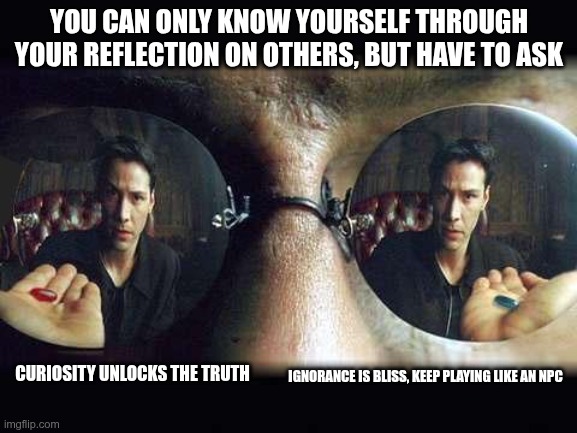
There is a certain burden to awareness. During my college years, I reached a point of profound—if somewhat cynical—understanding: perhaps the best way to survive is to mind your own business and live in ignorance. To be truly aware is to be in a state of constant flux, questioning the very foundations of your environment. In fact, those who remain perpetually aware often find themselves lacking social company, as their refusal to accept the status quo can be unsettling to those around them.
However, ancient wisdom offers a different perspective on this tension. Vedanta philosophy suggests a path of “witnessing”—observing everything with the clarity of that inner child, but without the immediate compulsion to follow every observation with an action. It is about maintaining the “why” without being consumed by the “what now?”
If we do not nourish the child within us, we risk becoming what I can only describe as “functional zombies.” We move from paycheck to paycheck, acquiring objects to fill a void left by the questions we stopped asking. Unless those questions are placed, we will never truly know reality, let alone the truth. To reclaim our curiosity is to reclaim our humanity; it is the only way to ensure we are actually living, rather than just existing in a pre-conditioned loop.